
Top 5 eCommerce Development Companies in Leeds
Leeds has no shortage of eCommerce agencies. That's actually the problem.
The UK eCommerce market is heading for $140 billion in 2025 and $250 billion by 2030. Mobile commerce already accounts for 58% of transactions. Businesses are navigating post-Brexit VAT complexity, Black Friday infrastructure demands, and multi-channel integrations all at once. The stakes are real.
And yet most businesses still pick an agency the wrong way. They look at the website, skim the case studies, and go with whoever seemed most confident in the first meeting.
Six months later they're back to square one.
We looked at Clutch ratings, platform depth, actual client outcomes, and what each agency is genuinely built for — not what they claim to be built for. Leeds has 78% digital adoption and a tech ecosystem that punches well above its weight. The agencies here reflect that.
Five made the cut. They're not interchangeable. Neither is your project.
The Five Agencies at a Glance
| Rank | Company | Clutch | Core Strength | Type | Size | Active |
|---|---|---|---|---|---|---|
| 1 | nopStation | 5.0 ★ | nopCommerce, .NET Enterprise, B2B, ERP/CRM, Headless PWA | Global | 500–1,000 | 19+ |
| 2 | Blue Badger | 5.0 ★ | Shopify Plus, Core Web Vitals, DTC Revenue, UX | Mid-tier | 10–49 | 10+ |
| 3 | SPLIT Dev. | 5.0 ★ | Custom Shopify, Rapid Launch, Conversion Engineering | Boutique | 2–9 | 7+ |
| 4 | Codal | 5.0 ★ | Cloud-Native, Startup Scaling, Agile Delivery | Mid-tier | 50–249 | 15+ |
| 5 | Cefar | 5.0 ★ | Magento Enterprise, High-Traffic Performance | Mid-tier | 10–49 | 12+ |
*All ratings sourced from Clutch at time of publication.
Global (USA, UAE, Germany, Bangladesh) | 500–1,000 staff | 19+ years on nopCommerce
Most agencies will tell you they do enterprise. nopStation actually means it.
They work exclusively within the nopCommerce ecosystem — an open-source .NET framework that gives businesses complete control over their codebase, with no recurring SaaS licensing fees eating into margin. That's a meaningful distinction when you're running a business at scale.
Their B2B capabilities are what genuinely set them apart. Role-based pricing, vendor management portals, hierarchical access controls, customer-specific product catalogues — this is the kind of infrastructure that most platforms only approximate. nopStation builds it properly.
On integrations, they cover the ground that matters for UK enterprise: SAP, Microsoft Dynamics 365, and Sage 50 on the ERP side; Stripe, Klarna, and Clearpay on payments; headless PWA architecture for businesses that need to decouple their frontend from their commerce layer. They also handle the regulatory side — native UK VAT and MOSS compliance, GDPR-secure data pipelines, PCI-DSS Level 1 certification.
With 100+ certified nopCommerce specialists, this isn't a team that has dabbled in the platform. It's their entire focus. For Leeds businesses running complex operations, that kind of depth is hard to find anywhere else.
Where they fit best:
- Enterprise retailers with complex B2B requirements
- Businesses needing ERP/CRM integration (SAP, Dynamics 365, Sage 50)
- Companies that want architectural control without ongoing licensing costs
- Organisations with serious regulatory requirements (VAT, GDPR, PCI-DSS)
Mid-tier (10–49 staff) | 10+ years active
Speed kills — in the good sense. A one-second delay in page load time can cost a retailer a meaningful percentage of conversions. Blue Badger knows this better than most.
They specialise in Shopify Plus performance engineering, with a particular focus on Core Web Vitals — the Google-defined metrics that affect both search rankings and real user experience. This isn't surface-level optimisation. Clients report measurable improvements in site speed and revenue following their engagements, which reflects a genuinely data-driven way of working.
They're the right call for direct-to-consumer brands that are already on Shopify Plus and suspect they're leaving money on the table. If your store is functional but not performing the way it should, Blue Badger is built for exactly that problem.
Where they fit best:
- DTC brands on Shopify Plus looking to improve conversion rates
- Businesses where site speed is a measurable revenue problem
- Retailers who want data-driven UX improvements, not aesthetic redesigns
Boutique (2–9 staff) | 7+ years active
Small team. Perfect Clutch record. Builds stores that work from day one.
SPLIT Development's value is in what they don't do as much as what they do. They don't overcomplicate. They don't overpromise. They take Shopify builds seriously, communicate clearly throughout, and deliver stores that are commercially ready without the usual back-and-forth.
For businesses that need to get to market quickly without sacrificing quality, the boutique model has real advantages — direct access to senior people, faster decision-making, and an agency that can't afford to be complacent about client outcomes.
They're not the right fit for complex enterprise builds. But for focused Shopify work within a defined scope, they're as reliable as it gets in Leeds.
Where they fit best:
- Brands launching their first serious Shopify store
- Businesses with clear briefs and defined timelines
- Companies that want boutique access, not account management layers
Mid-tier (50–249 staff) | 15+ years active
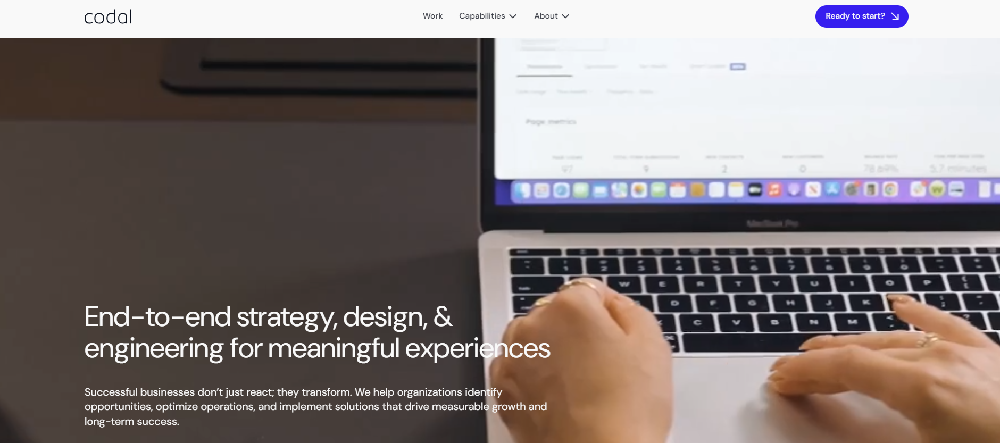
The problem with building a platform for where you are now is that you'll outgrow it faster than you expect. Codal builds for where you're going.
Their cloud-native, agile-first approach means the platforms they build don't need to be rebuilt from scratch every 18 months as a business grows. They're experienced with complex multi-system integrations — connecting eCommerce platforms to CRMs, ERPs, fulfilment networks, and analytics stacks — which matters a lot when your tech requirements start getting complicated.
Clients consistently highlight organised project management and an architectural maturity that reduces infrastructure risk at scale. For Leeds startups with real growth targets, Codal is a credible choice.
Where they fit best:
- Startups and scale-ups expecting significant growth
- Businesses with complex multi-system integration needs
- Teams that want structured agile delivery, not ad-hoc project management
Mid-tier (10–49 staff) | 12+ years active
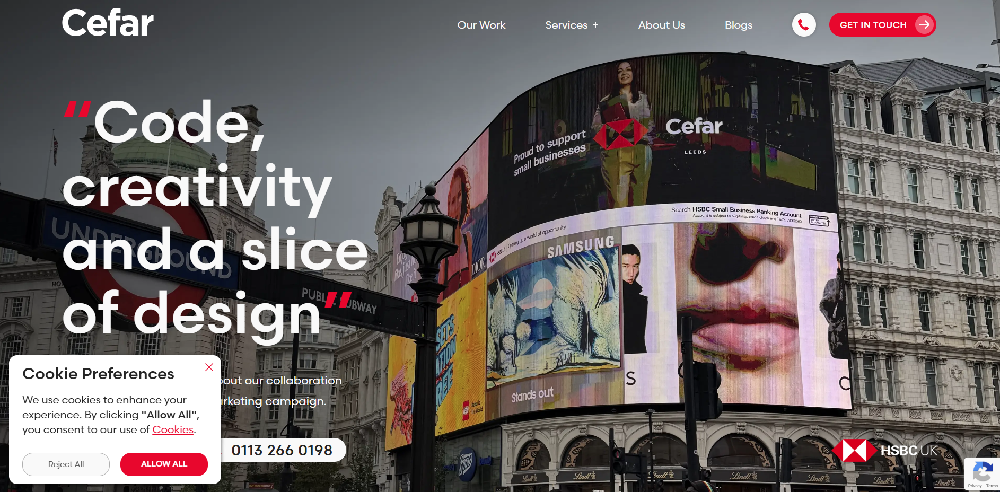
Magento remains the platform of choice for large enterprises that need deep customisation and a commerce infrastructure that can handle serious complexity. The catch is that Magento done badly is a significant liability. Cefar does it well.
Their focus is on high-traffic performance architecture — systems that stay fast and stable under heavy load, which is where generic Magento implementations typically fail. They take a long-term partnership approach, which suits the kind of enterprise clients who need ongoing development support rather than a one-off build.
If your business is committed to Magento and you need someone who genuinely knows the platform's strengths and failure modes, Cefar is worth a conversation.
Where they fit best:
- Large enterprises with complex catalogue and pricing requirements
- High-traffic retailers where platform stability is non-negotiable
- Businesses that need a long-term Magento partner, not a one-off vendor
So Which One Is Right for You?
All five hold a 5.0 on Clutch. That tells you they're all capable. It doesn't tell you which one fits your situation.
Here's the honest breakdown:
- 🔹 Complex B2B or enterprise needs with ERP integration: nopStation
- 🔹 Shopify Plus performance and conversion problems: Blue Badger
- 🔹 Clean, focused Shopify launch on a defined scope: SPLIT Development
- 🔹 Startup scaling fast with cloud infrastructure needs: Codal
- 🔹 Magento enterprise with high-traffic requirements: Cefar
Beyond platform fit, look for agencies that can show you specific work in your sector, give you client references you can actually call, and communicate clearly before you've even signed anything. The way an agency handles the sales process tells you a lot about how they'll handle the project.
The Bottom Line
Leeds has real eCommerce talent. The agencies on this list aren't here because they paid to be — they're here because their clients say they deliver.
The UK market is heading toward $250 billion. Whether your business captures a meaningful share of that depends partly on infrastructure, and infrastructure starts with picking the right people to build it.
Use this list as a shortcut, not a substitute for doing your own due diligence. Talk to more than one agency. Ask to speak to their clients. Then make a decision based on fit — not whoever had the best deck.
FAQ
Which Leeds agency is best for enterprise eCommerce?
Why does Leeds matter for UK eCommerce?
What does eCommerce development cost in Leeds?
Which platform is right for my business?
What are the real advantages of open-source eCommerce?
What makes nopStation different from the other agencies here?




.webp)