
Revolution Tyres: A B2B Wholesale Tyre Commerce Build on nopCommerce 4.70 with ERP SQL Integration




A brief background on Revolution Tyres
Revolution Tyres is an independent South African tyre wholesaler trading as Mazeppa Export Corporation (PTY) Ltd T/A Revolution Tyres. Headquartered in Cape Town and operating across three distribution centres in Cape Town, Durban, and Johannesburg, the company supplies passenger (PCR), light truck (LT), truck and bus radial (TBR), agricultural, industrial, and off-the-road (OTR) tyres, plus forestry in the online range, under brands including HiFly, Torque, Galaxy, Alliance, Primex, and Advance. Its production storefront is live at revolutiontyres.com, powered by the Comalytics and nopStation hybrid B2B and B2C stack on nopCommerce 4.70. The engagement centred on giving trade buyers a national online catalogue with ERP-backed accounts, warehouse-aware fulfilment, technical tyre discovery, and order or quote posting back to the ERP, all without exposing wholesale prices to anonymous browsers.
Challenges
Revolution Tyres needed a public catalogue that trade customers could trust as a buying tool, with their ERP remaining the system of record for accounts, stock, and pricing. After reviewing the commercial rules and the nopCommerce 4.70 platform, our team identified the key challenges below.
Wholesale Catalogue at Tyre-Industry Scale: The site had to present roughly 1,700 technical SKUs across Passenger, Truck, Agricultural, Industrial, Off The Road, and Forestry, with size, profile, rim, tread, and brand as first-class discovery, all without turning commercially sensitive account prices into public list prices. A generic grid of lifestyle product cards would not serve professional tyre buyers.
ERP as the Single Source of Truth: Trade accounts carry credit limits, current balances, VAT numbers, ship-to branches, and price-group codes that live in the ERP, not in standard nopCommerce. Without a reliable sync and place-order path, the storefront would drift from credit reality and create fulfilment and margin risk.
Account-Based and Call-For Pricing: Guests browse freely but see “Call for pricing.” Linked trade buyers need group, special, and account pricing resolved from ERP rules. Standard nopCommerce list pricing cannot express wholesale tyre commerce without custom B2B pricing and payment-on-account behaviour.
Multi-Warehouse Fulfilment Across South Africa: Revolution Tyres runs three distribution centres, in Cape Town, Durban, and Johannesburg, each holding its own stock. A single combined national number on the storefront risked promising tyres that the customer's nearest DC simply didn't have on the shelf.
Correct ERP Document Types for Orders and Quotes: Every online order or quote has to land in the ERP as the right type: B2B Sales Order, B2B Quote, B2C Sales Order, or B2C Quote. Forcing everything through one generic B2C order type would have broken trade credit terms and quote handling for wholesale customers.
Role-Based B2B Operations: A sales rep, a quote assistant, an accounts clerk, and a trade buyer all need to see and do different things on the same site. nopCommerce's default roles weren't built for that kind of internal trade operation.
Tyre-Specific Discovery: Professional buyers filter by Width, Profile, Rim Diameter, Size, Tread, Position, Weight, and Brand. Category browse alone is too slow for high-SKU tyre wholesale.
Our Solution
Our team took a plugin-driven approach on nopCommerce 4.70 rather than rebuilding the storefront from scratch. The work spans the nopStation B2B stack, chiefly B2BB2CFeatures, ERPIntegrationCore, ErpDataScheduler, ManageB2CandB2BCustomer, ErpSqlIntegration, and Payments.B2BAccount, together with Seven Spikes Emporium and Ajax Filters for the storefront experience. The platform runs on .NET 8 with MSSQL, hosted with Comalytics in the South Africa Standard Time zone. One Emporium-themed catalogue then behaves differently once ERP identity is known.
SKU-First Catalogue Structure: Category pages list products by SKU and name across Passenger, Truck, Agricultural, Industrial, Off The Road, and Forestry, matching how trade buyers actually search rather than a lifestyle product grid. Guests can browse the full technical range freely while prices stay gated behind account rules.
Scheduled ERP Synchronisation: ERP SQL Integration syncs eight domains on a schedule: accounts, products, stock, group prices, special prices, ship-to addresses, invoices, and orders. This keeps the storefront aligned with ERP credit, balance, and stock reality instead of drifting into a second source of truth.
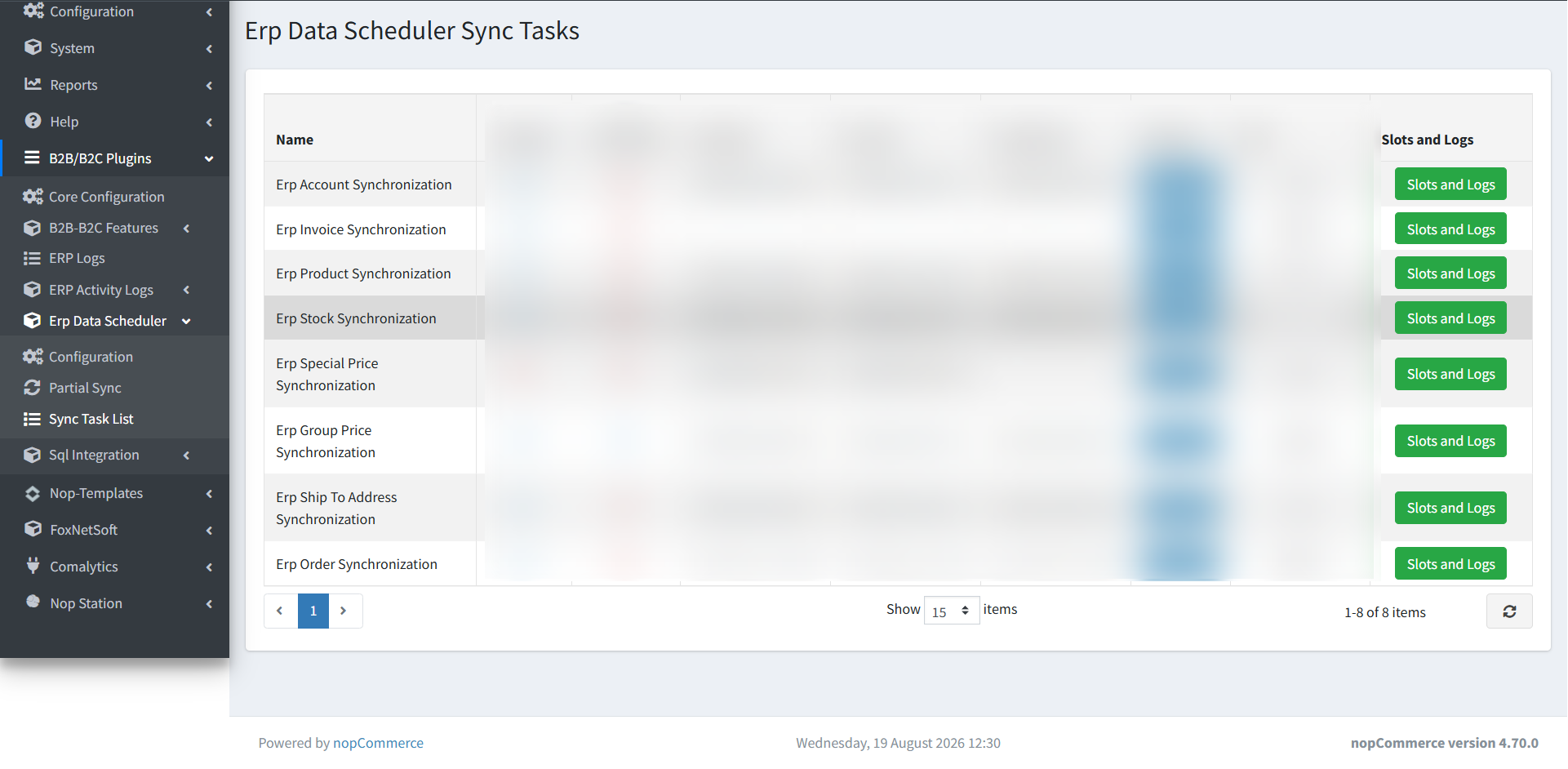
Image 1.2: ERP data scheduler sync tasks
Account-Based and Call-For Pricing: Guests see Call for pricing on every product. Authenticated trade buyers resolve pricing from their linked ERP account, including group and special price codes, and can pay on account through the B2B Account payment method, so commercial terms follow ERP identity rather than a public list price.
Per-Warehouse Stock Visibility: Product pages break stock down by warehouse, showing exactly what is available in Cape Town, Durban, and Johannesburg instead of a single combined number. Scheduled ERP stock sync keeps this warehouse-level view aligned with the three-DC network.
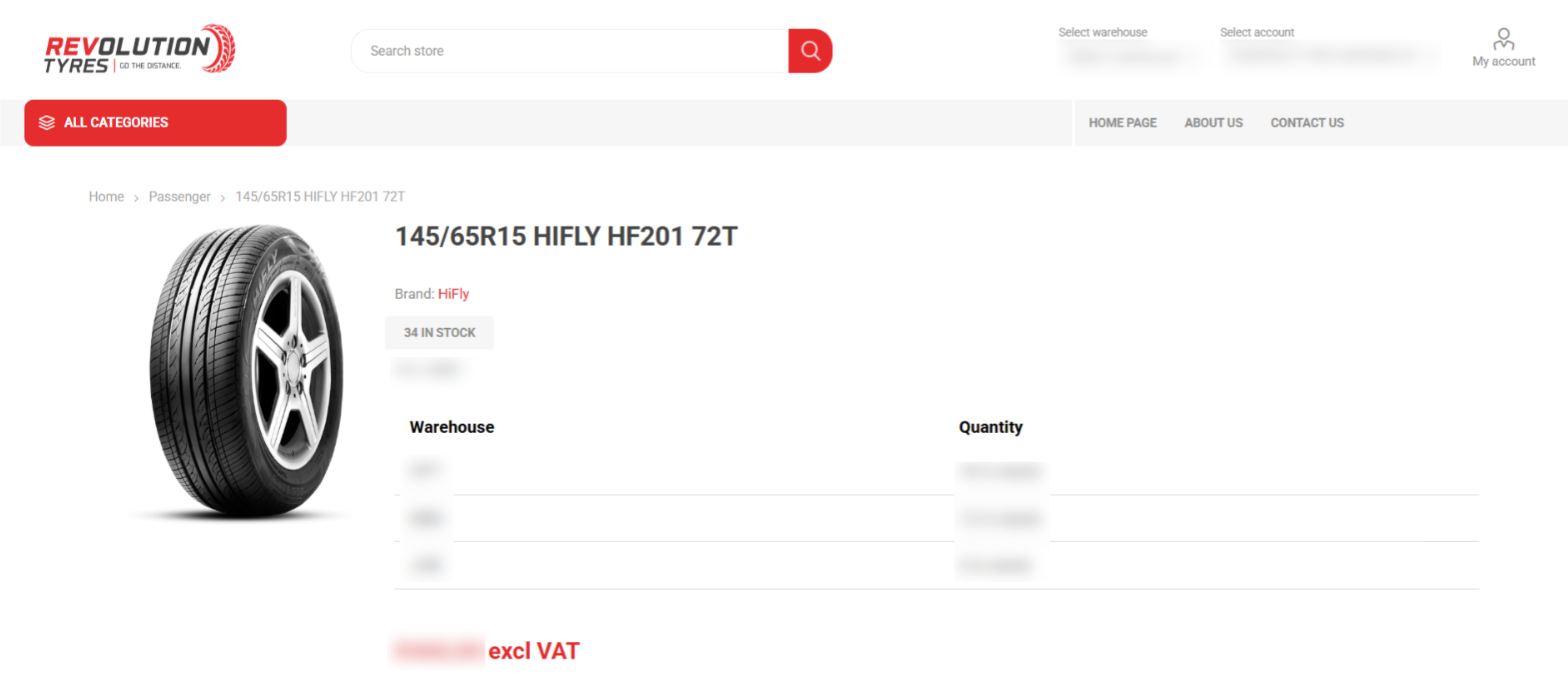
Image 1.3: Product detail with per-warehouse stock visibility
Four ERP Document Types: Orders and quotes post through ERP SQL Integration as a B2B Sales Order, B2B Quote, B2C Sales Order, or B2C Quote, keeping trade and consumer transactions separate at the ERP level. Place-order posting confirms online B2B sales orders back into the ERP automatically.
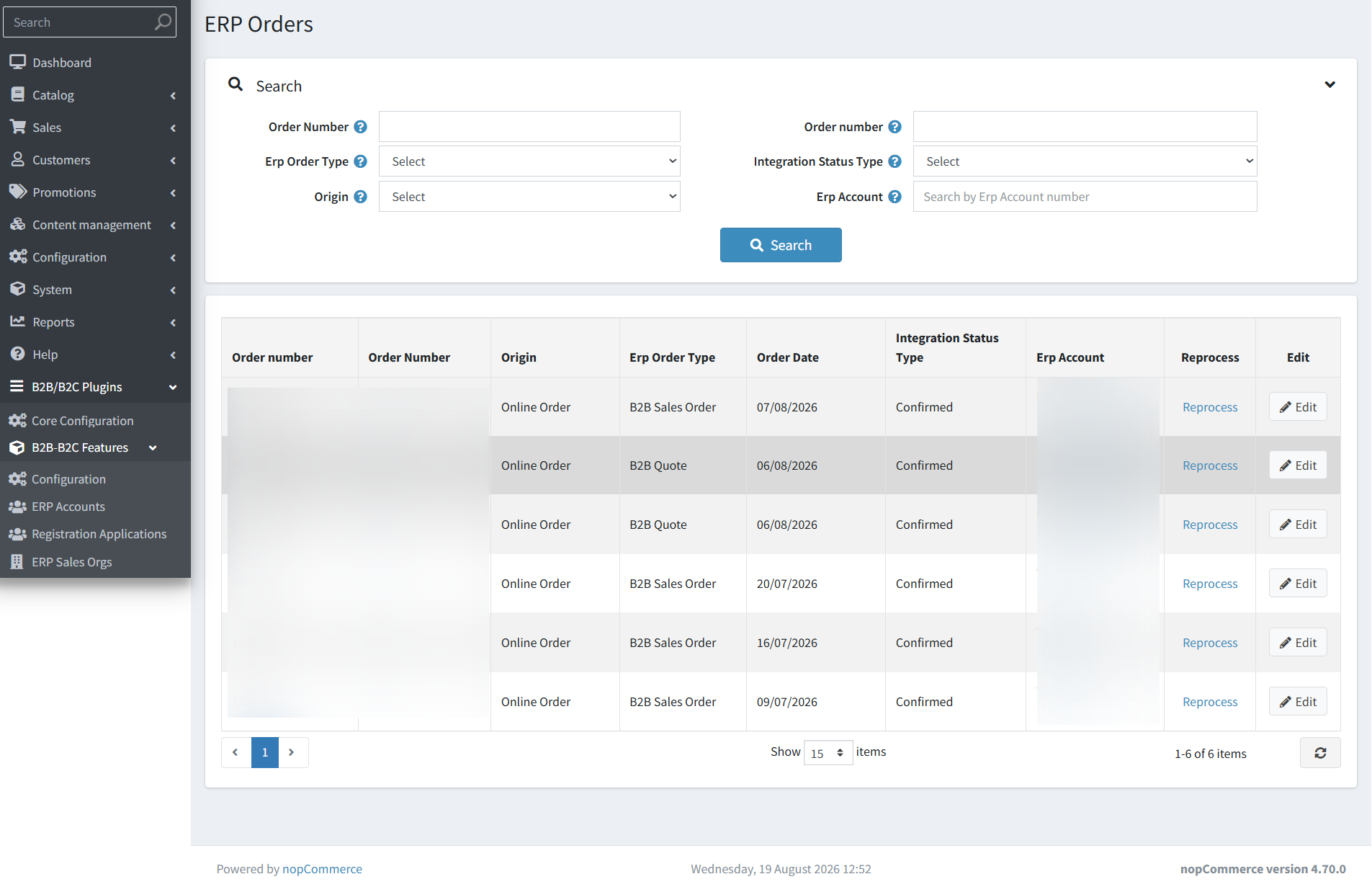
Image 1.4: ERP orders with B2B and B2C document types
Dual B2B and B2C User Model with Eight-Role Access: Every ERP-linked user is typed for B2B or B2C behaviour. Roles cover B2B Customer, B2C Customer, B2B Sales Rep, B2B Quote Assistant, B2B Order Assistant, Quick Order User, B2B-B2C Admin, and B2B Customer Accounting Personnel. Guests and buyers share the same navigation; pricing, payment, stock visibility, ship-tos, and document type diverge after login.
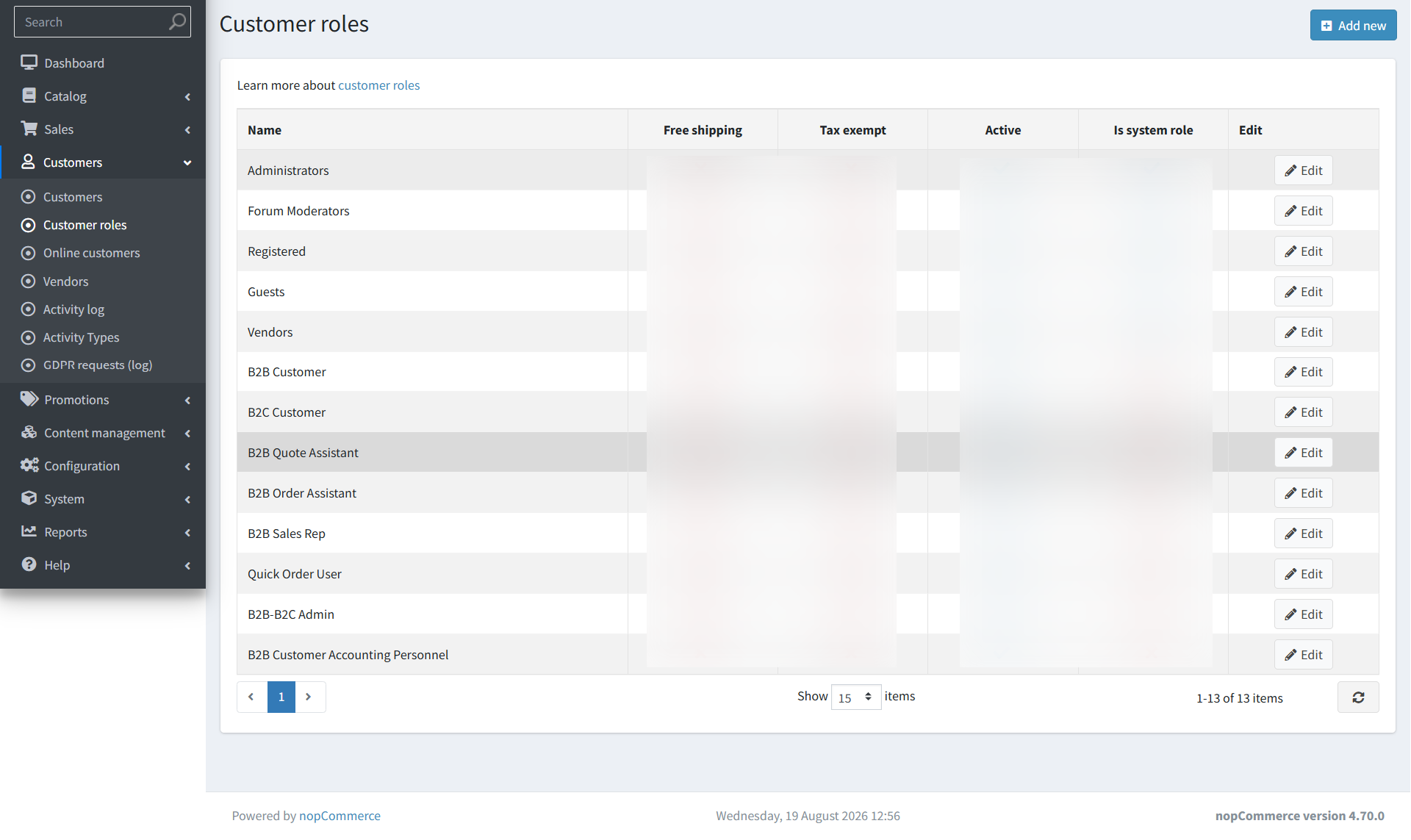
Image 1.5: B2B and B2C customer roles
Faceted Tyre-Spec Discovery: Ajax Filters expose Width, Profile, Type, Position, Rim Diameter, Size, Tread, Weight, and Brand on every category page. Product detail pages carry the same specifications on a dedicated tab, with a Contact Us enquiry tab for buyers who want an assisted or non-priced conversation.
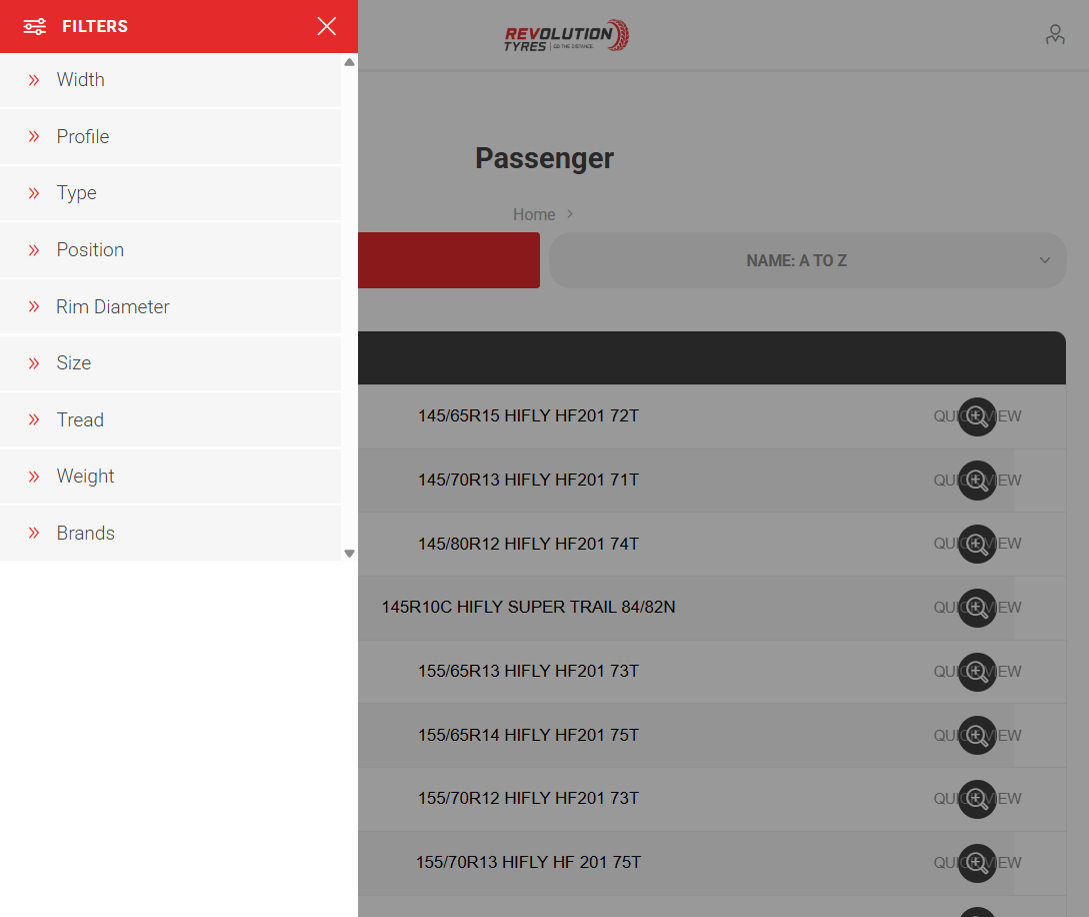
Image 1.6: Ajax Filters tyre technical facets
Together, these seven solutions let one Emporium storefront run wholesale tyre commerce nationally, with ERP SQL Integration as the system of record for commercial data.
Results:
- Delivered a B2B wholesale tyre storefront on a single nopCommerce 4.70 and .NET 8 instance.
- Published a technical catalogue of approximately 1,700 tyre SKUs across six category families with Ajax Filters for size and specification discovery.
- Automated posting of four ERP document types so trade and consumer transactions stay separate at the ERP level.
- Synchronised eight ERP domains on a schedule, covering accounts, invoices, products, stock, special prices, group prices, ship-to addresses, and orders.
- Enabled login-gated call-for and account pricing with B2B Account payment and credit-aware ERP accounts.
- Reflected real per-warehouse stock across three South African distribution centres on every product page.
- Implemented an eight-role access model for trade buyers, sales reps, assistants, administrators, and accounting personnel.